Immersive Dermatology in Augmented Reality
Turning a static brochure into an exploratory clinical spatial experience
Overview
From Print to Spatial Understanding
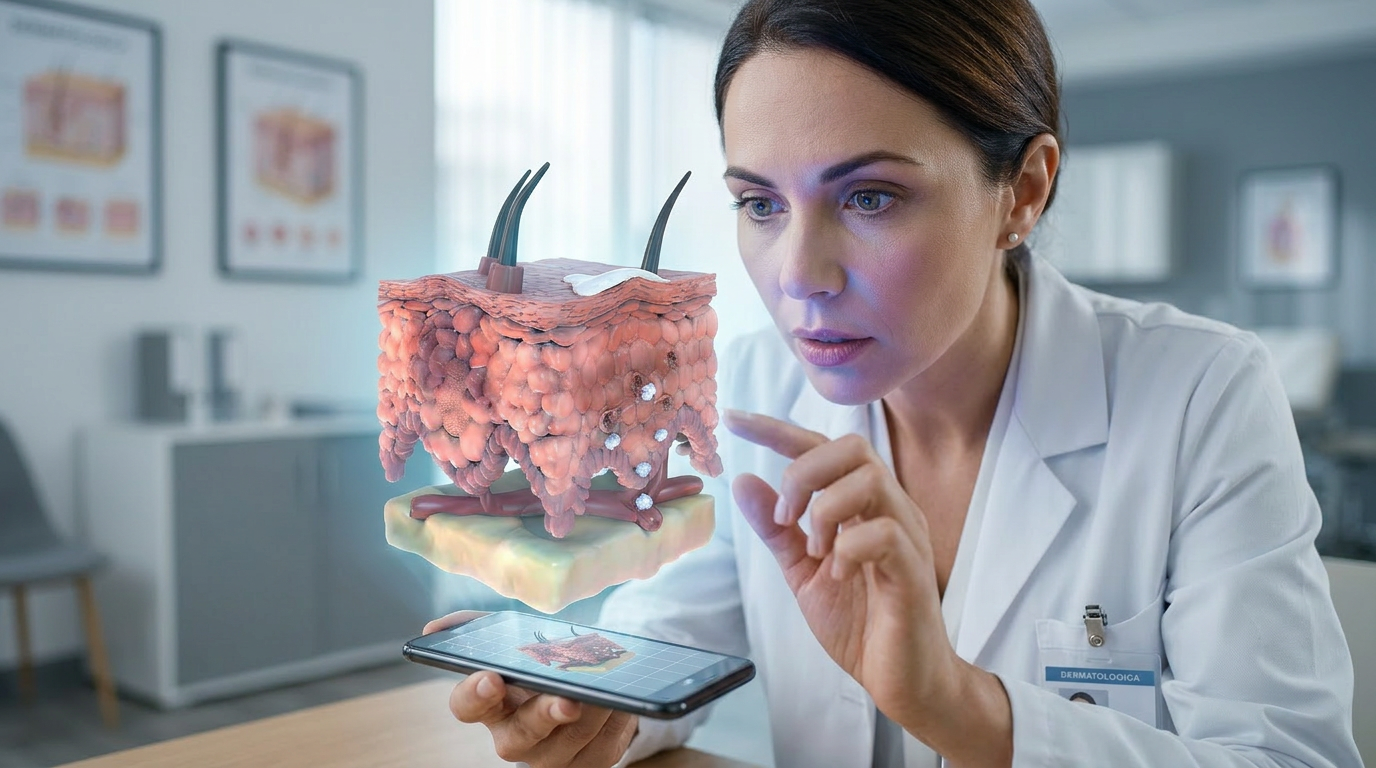
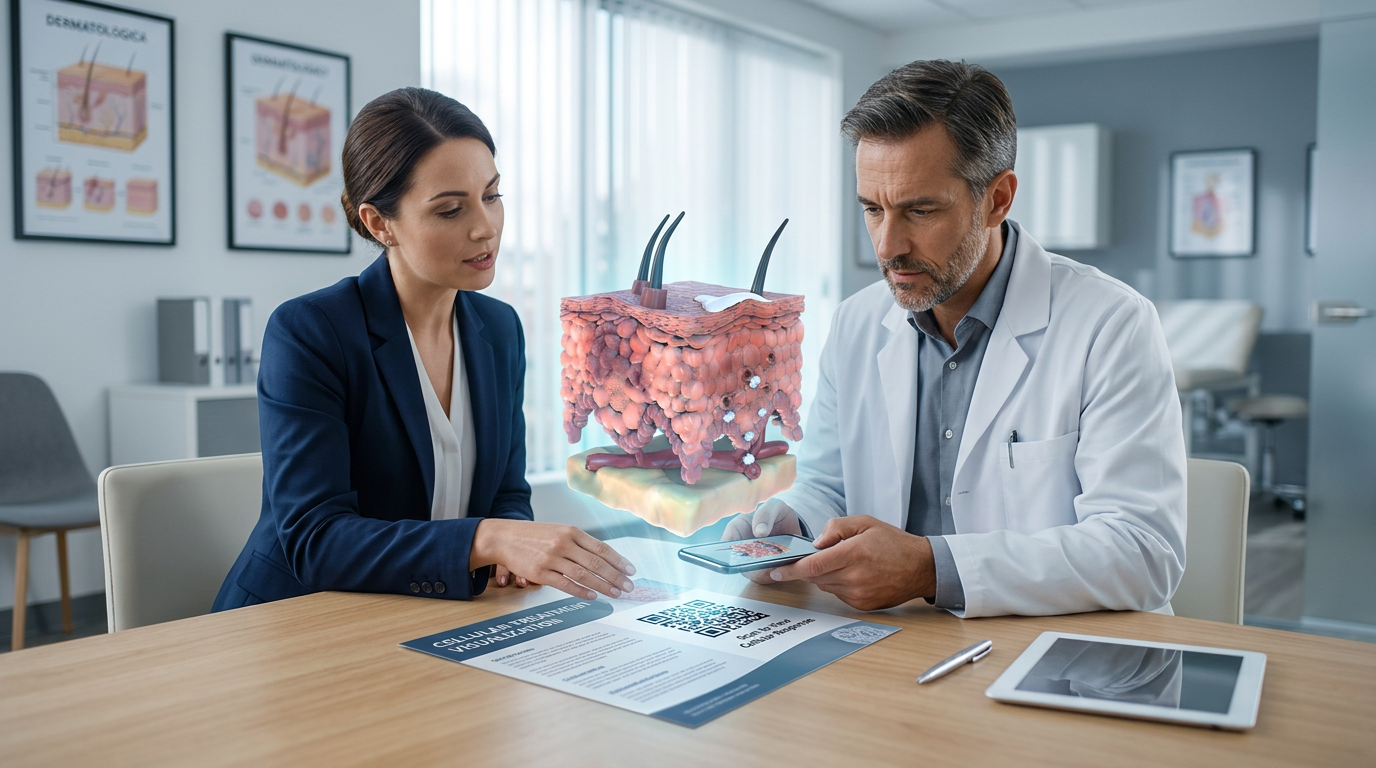
Printed materials often struggle to hold attention in complex clinical conversations. Our task was to extend a traditional brochure into something more engaging without disrupting the simplicity of the format clinicians already knew. We designed an interactive medical 3D experience that could be accessed instantly through a QR code. With a simple scan, the page opened into a spatial exploration of skin structure, disease progression, and therapeutic impact. The result transformed a passive reading moment into an interactive learning environment.

Case Summary
A Brochure That Opens Up
The challenge was to make the interactive experience intuitive enough for use during brief clinical conversations. Several layers of anatomy, disease progression, and therapeutic impact needed to coexist within one clear spatial narrative. The experience had to respect specialist knowledge while allowing representatives to guide attention without losing orientation.
Case Summary
Engagement Through Interaction
When scientific communication moves from page to space, attention follows. A familiar brochure became a gateway to deeper understanding without adding friction to the conversation. Sometimes the most powerful medical animation begins with a single printed page.
Closing Line
A Story Told in Three Surfaces
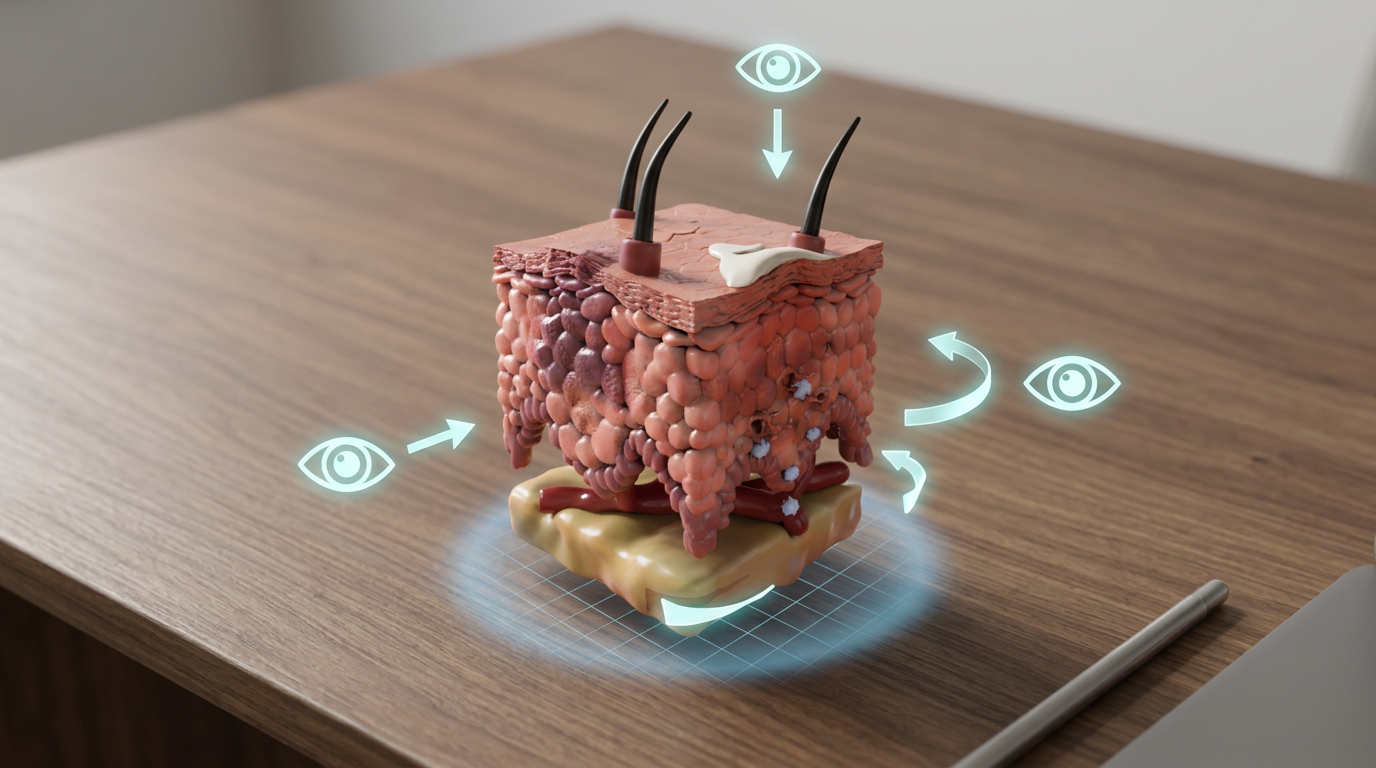
The model was designed as a volumetric object rather than a flat illustration. A cube-like structure allowed us to dedicate three distinct faces of the model to three moments in the clinical story:
• A diseased skin state
• The treatment phase
• The visually improved skin condition
By simply rotating the model, clinicians could move through this progression spatially. Each side revealed a different stage while maintaining the same anatomical framework, making comparison immediate and intuitive. The interaction turned progression into something clinicians could literally turn in their hands.